Aerospace and defense maintenance, repair, and overhaul operations are under more scrutiny than ever. According to a study by Ponemon Institute, the non-compliance violation costs are now 2.65 times higher than compliance costs. The MRO operations are shaped by aging fleets, globalized supply chains, and a growing web of regulatory requirements such as FAA, ITAR, and AS9100.
Many organizations are discovering that legacy MRO IT systems struggle to keep up with technological and logistical advances, resulting in fragmented data, manual workarounds, and increased audit risk. The real challenge lies in building an operation where compliance, efficiency, and asset reliability are seamlessly integrated into every process. IFS cloud solutions are a foundation for operational excellence and a catalyst for staying competitive in the aviation and defense industry.
This guide covers:
- How a unified, modular cloud platform transforms MRO for aerospace and defense organizations
- The specific ways IFS Cloud automates workflows, embeds compliance, and delivers real-time insights
- What decision-makers should evaluate when selecting an MRO IT system for complex, regulated environments
- How advanced technologies like AI, IoT, and predictive analytics are shaping the future of A&D MRO
P.S. Astra Canyon Group brings deep experience in guiding aerospace and defense organizations through the complexities of IFS Cloud implementation for MRO. The team supports every phase of the ERP journey, from initial evaluation and compliance alignment to integration and ongoing optimization. With a focus on regulatory requirements, supply chain coordination, and asset reliability, the approach is tailored to the realities of aviation and defense. Book a consultation to evaluate IFS Cloud for your aerospace and defense MRO and see how a purpose-built solution can drive compliance, efficiency, and measurable results.
How IFS Cloud Streamlines MRO for Aerospace and Defense
IFS Cloud stands out as a comprehensive solution for aerospace and defense MRO, offering a unified platform that addresses the sector’s most persistent challenges. The complexity of managing compliance, asset reliability, and supply chain coordination in regulated environments demands more than a patchwork of disconnected systems.
IFS Cloud brings together ERP, EAM, and MRO capabilities in a modular architecture, allowing organizations to streamline operations, embed compliance, and gain real-time visibility across every stage of the asset lifecycle.
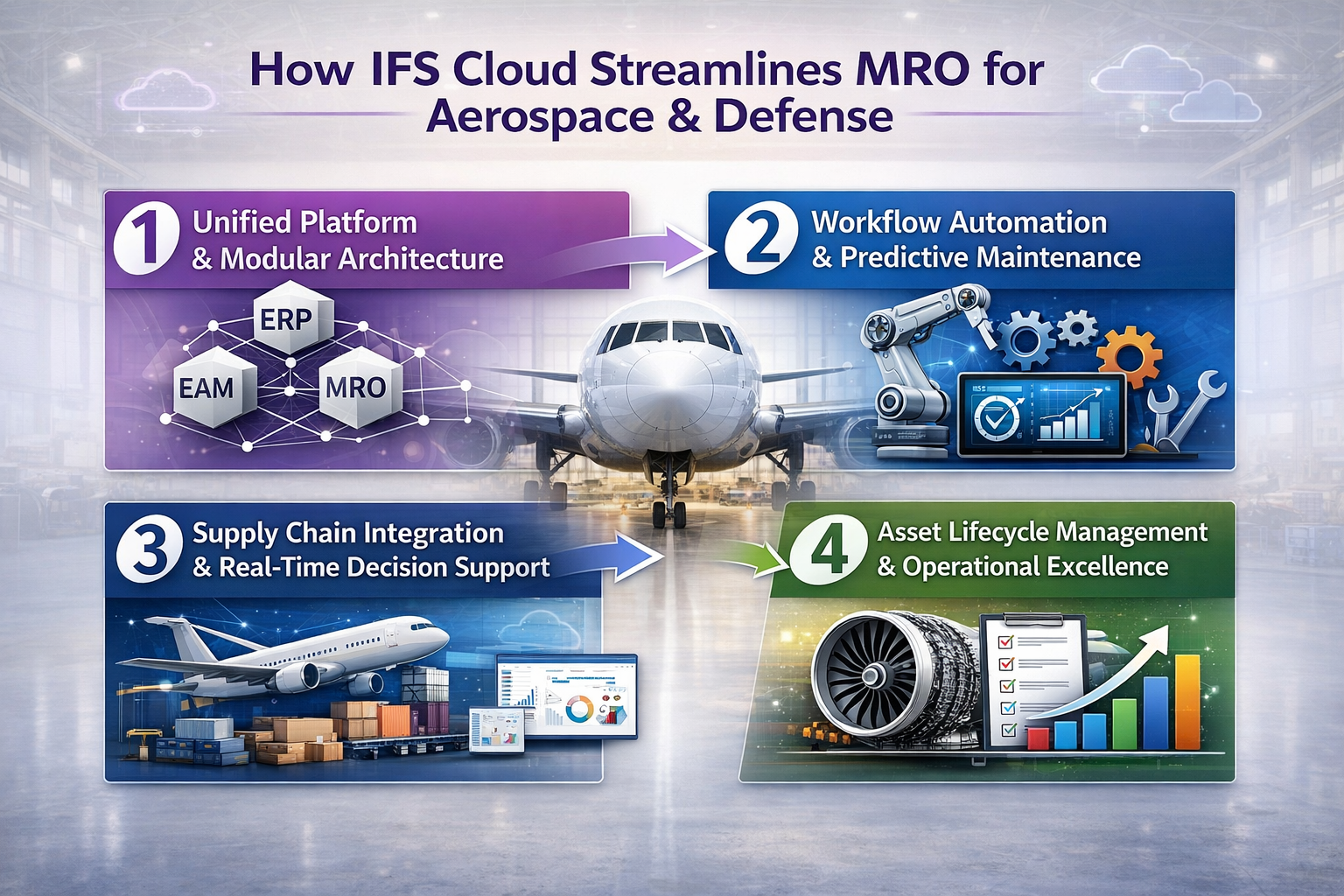
Unified Platform and Modular Architecture
Aerospace and defense organizations operating with a mix of legacy systems, manual processes, and siloed data can hinder both compliance and efficiency. IFS Cloud addresses these issues by providing a single platform that integrates ERP, enterprise asset management, and MRO modules.
This unified approach ensures that every department, from engineering to procurement to maintenance, works from a single master data source. The modular design allows organizations to deploy only the applications they need, such as MRO, PLM, or EAM, and scale up as requirements evolve. This flexibility supports project-based workflows like engineer-to-order (ETO) and make-to-order (MTO), which are common in defense manufacturing and aviation maintenance.
Integration with engineering, production, and supplier systems is built in, reducing the need for costly customizations and enabling seamless data flow across the operation. By consolidating critical functions on a single cloud platform, IFS Cloud helps organizations manage complex projects, maintain strict compliance, and optimize resource allocation.
Read Next: Is IFS Cloud ERP Solution a Good Choice for Aerospace and Defense Companies?
Workflow Automation and Predictive Maintenance
Automation and predictive analytics are transforming the way maintenance, repair, and overhaul activities are managed in aerospace and defense. IFS Cloud delivers a suite of tools that streamline maintenance execution, improve asset reliability, and reduce turnaround time. Each workflow is designed to address specific pain points, ensuring that compliance and efficiency are not left to chance.
-
Predictive maintenance scheduling: IoT sensor data and machine learning models are used to forecast equipment failures and optimize maintenance intervals. This approach minimizes unplanned downtime and maximizes asset uptime by aligning maintenance with actual usage patterns.
-
Automated work order generation: Maintenance tasks are triggered automatically based on real-time asset health, usage metrics, or compliance events. This reduces manual intervention and ensures that critical maintenance is never overlooked.
-
Component and part tracking: Every part is linked to its repair history, service plan, and compliance status. This level of traceability supports strict audit requirements and helps extend the lifecycle of high-value assets.
-
Engineering change control: Built-in workflows manage version tracking, digital sign-offs, and audit trails for engineering changes. Teams always work from the latest, compliant documentation, reducing the risk of errors or regulatory breaches.
-
Real-time dashboard alerts: Customizable dashboards highlight urgent maintenance issues, supply chain bottlenecks, or compliance risks. Decision-makers can act quickly, supported by live operational data.
-
Mobile-enabled maintenance execution: Technicians access digital work instructions, log repairs, and capture evidence directly from the field. This accelerates turnaround times and improves the accuracy of maintenance records.
-
Automated procurement triggers: When inventory levels for parts or consumables fall below set thresholds, the system initiates procurement workflows. This supports project-based supply chain management and reduces delays.
-
Integrated audit and compliance checkpoints: Regulatory checks are embedded into every workflow, from procurement to inspection, ensuring that FAA, ITAR, and AS9100 requirements are met without manual oversight.
Compliance, Security, and Audit Readiness
Maintaining compliance with regulations such as FAA, ITAR, AS9100, and DFARS is a constant challenge in aerospace and defense MRO. IFS Cloud embeds compliance, security, and audit readiness into every layer of the platform, providing organizations with the tools needed to meet strict requirements and respond confidently to audits.
|
Compliance Requirement/Area
|
How IFS Cloud Addresses It
|
|
FAA/AS9100/ITAR/DFARS compliance
|
Built-in compliance frameworks, digital sign-offs, and audit trails ensure that every process is documented and verifiable.
|
|
Supplier and part validation
|
Automated certification checks, vendor scoring, and traceability features prevent non-compliant parts from entering workflows.
|
|
Data security and access control
|
Encrypted databases, user-level permissions, and classified access policies protect sensitive information at every stage.
|
|
Audit readiness
|
Real-time reporting, document trails, and digital evidence capture simplify audit preparation and support regulatory reviews.
|
|
Change management
|
Version control, engineering change workflows, and regulatory sign-off processes ensure that all changes are tracked and approved.
|
|
Contract and financial compliance
|
Milestone billing, project capitalization, and earned value reporting support compliance with defense acquisition rules.
|
IFS Cloud’s approach to compliance is proactive, embedding checkpoints and documentation requirements into daily operations. This reduces the risk of non-compliance, streamlines audits, and provides peace of mind for organizations operating in highly regulated environments.
Read Next: Configuring IFS Cloud for ITAR Compliance in Aerospace & Defense
Supply Chain Integration and Real-Time Decision Support
Supply chain volatility and project complexity are persistent challenges in aerospace and defense MRO. IFS Cloud addresses these issues by integrating supply chain, procurement, and analytics tools into a single platform, enabling real-time visibility and agile decision-making.
Dashboards provide live updates on inventory levels, supplier performance, and project status, allowing teams to respond quickly to disruptions or emerging risks. AI-driven analytics forecast lead times, flag high-risk components, and model supply chain scenarios, supporting proactive risk management. Project-based procurement tools align budgets, timelines, and compliance requirements for multi-year contracts, ensuring that resources are allocated efficiently and regulatory obligations are met.
Seamless integration with engineering, production, and external supplier systems eliminates data silos and supports end-to-end process optimization. This level of integration empowers organizations to streamline operations, reduce costs, and maintain operational excellence in a dynamic environment.
Asset Lifecycle Management and Operational Excellence
Maximizing asset reliability and minimizing lifecycle costs are central goals for aerospace and defense MRO. IFS Cloud provides comprehensive tools for tracking, optimizing, and continuously improving asset performance from acquisition to retirement.
-
Total asset visibility: Every asset, component, and maintenance event is tracked in a unified system, enabling proactive management and supporting compliance with regulatory requirements.
-
Lifecycle cost analysis: Built-in analytics allow organizations to evaluate maintenance spend, downtime, and asset utilization, informing decisions on whether to repair or replace equipment.
-
Condition-based maintenance: Real-time data triggers maintenance only when needed, reducing unnecessary work and extending the life of critical assets.
-
Warranty and contract management: Automated tracking of warranty status, contract terms, and service level agreements helps avoid missed claims and penalties.
-
Continuous improvement dashboards: Analytics identify recurring issues, root causes, and opportunities for process optimization, supporting a culture of ongoing improvement.
-
End-of-life planning: Tools for decommissioning, asset disposal, and regulatory reporting ensure compliance and cost control throughout the asset lifecycle.
-
Integration with EAM and PLM: Seamless data flow between asset management, engineering, and maintenance planning modules supports coordinated decision-making and efficient resource allocation.
Evaluating IFS Cloud for Your MRO Operation
The complexity of regulatory requirements, the need for seamless integration across departments, and the pressure to deliver operational excellence all raise the stakes for technology selection. A careful evaluation of IFS Cloud should focus on how well the platform addresses the realities of regulated, project-driven environments, and whether it can adapt to evolving business needs without introducing unnecessary risk or disruption.
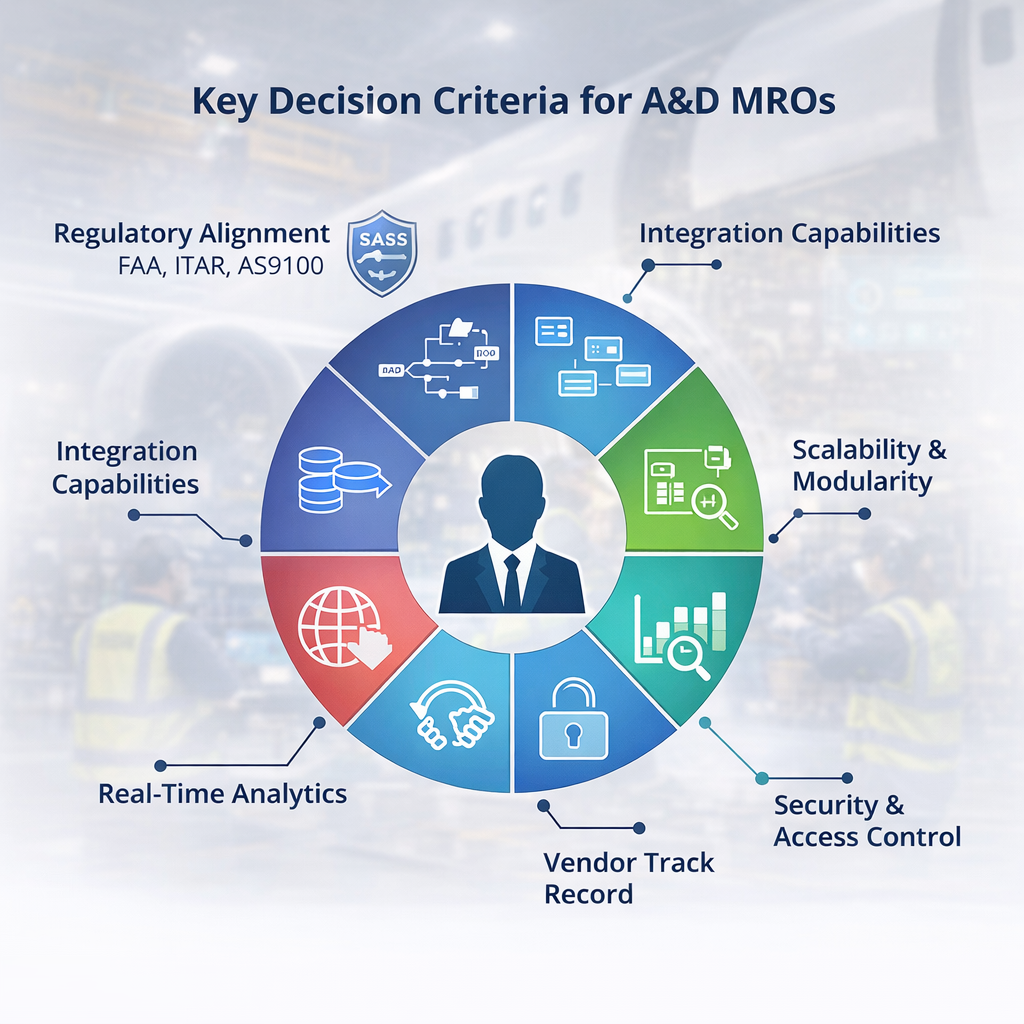
Key Decision Criteria for A&D MROs
Each organization must assess how the IFS platform supports compliance, integration, scalability, analytics, security, vendor reliability, and project-based workflows. The following breakdown explores each criterion in detail, helping decision-makers focus on what matters most for sustainable success.
Regulatory Alignment
IFS Cloud embeds compliance frameworks for FAA, ITAR, and AS9100 directly into daily workflows. This means that documentation, digital sign-offs, and audit trails are automatically generated as part of routine processes. By integrating these requirements into the system, organizations can reduce the risk of non-compliance and simplify audit preparation. This approach also supports ongoing regulatory changes, allowing updates to be reflected in workflows without manual intervention.
Integration Capabilities
Seamless connectivity with engineering, production, and supplier systems is essential for efficient MRO operations. IFS Cloud is designed to integrate with a range of external platforms, including CAD, PLM, and supplier management tools. This reduces the need for custom development and ensures that data flows smoothly between departments. The result is improved coordination, fewer manual data transfers, and a lower risk of errors or delays.
Scalability and Modularity
A modular ERP system allows organizations to deploy only the applications they need and expand as requirements change. IFS Cloud supports phased rollouts, making it possible to start with core MRO functions and add modules for PLM, EAM, or advanced analytics as the business grows. This flexibility helps organizations manage costs, minimize disruption, and adapt to new business models or regulatory demands over time.
Real-Time Analytics
Access to actionable data is critical for maintenance, supply chain, and financial decision-making. IFS Cloud provides dashboards and reporting tools that deliver real-time insights into asset performance, inventory levels, and project status. These analytics help organizations identify trends, respond quickly to emerging issues, and support continuous improvement initiatives.
Security and Access Control
Protecting sensitive defense data requires robust security measures. IFS Cloud uses encrypted databases, user-level permissions, and classified access policies to control who can view or modify information. These features help organizations comply with defense industry standards and reduce the risk of unauthorized access or data breaches.
Vendor Track Record
The experience and reliability of the ERP provider are important factors in a successful implementation. Organizations should review the provider’s history with complex aerospace and defense MRO environments, looking for evidence of successful projects, regulatory expertise, and long-term support. A strong track record reduces the risk of project delays, cost overruns, or unmet requirements.
Support for Project-Based Workflows
Aerospace and defense MROs often operate with engineer-to-order, make-to-order, and contract-driven models. IFS Cloud is designed to support these workflows, providing tools for budgeting, procurement alignment, delivery tracking, and resource planning. This ensures that the system can handle the unique demands of project-based operations without extensive customization.
Implementation Best Practices and Pitfalls
A successful IFS Cloud deployment depends on careful planning, clear communication, and proactive change management. The table below compares best practices with common pitfalls at each stage of implementation, offering practical tips to help organizations avoid costly mistakes.
|
Implementation Stage/Area
|
Best Practice
|
Common Pitfall
|
|
Requirements gathering
|
Involve stakeholders from all departments to capture detailed needs and compliance requirements.
|
Overlooking input from key users leads to gaps in functionality or compliance coverage.
|
|
Data migration and cleansing
|
Audit and clean legacy data before migration to ensure accuracy and integrity in the new system.
|
Migrating incomplete or inaccurate data results in errors and rework after go-live.
|
|
Change management and training
|
Develop a structured training plan and communicate changes early to build user confidence.
|
Underestimating the need for training causes resistance and slow adoption of new workflows.
|
|
Compliance validation
|
Test compliance workflows with real scenarios to confirm regulatory requirements are met.
|
Relying on assumptions about compliance, which can lead to audit failures or regulatory penalties.
|
|
Integration with legacy systems
|
Map out integration points and test data flows between IFS Cloud and existing platforms.
|
Ignoring integration needs results in manual workarounds and data silos.
|
|
Go-live and post-launch support
|
Establish a support team and monitor system performance closely during and after go-live.
|
Failing to provide adequate support leads to unresolved issues and user frustration.
|
Read Next: Addressing Common Challenges for Successful IFS ERP Implementations and Adoption
Future-Proofing A&D MRO: Advanced Technologies and Trends
Aerospace and defense MRO is evolving rapidly as new technologies reshape how maintenance, supply chain, and compliance are managed. Organizations that want to remain competitive are looking beyond traditional ERP systems, seeking solutions that can adapt to changing regulations, support operational efficiency, and leverage the latest advances in artificial intelligence, IoT, and modular software design. IFS Cloud is designed to help organizations stay ahead of these changes by embedding advanced capabilities directly into its platform.
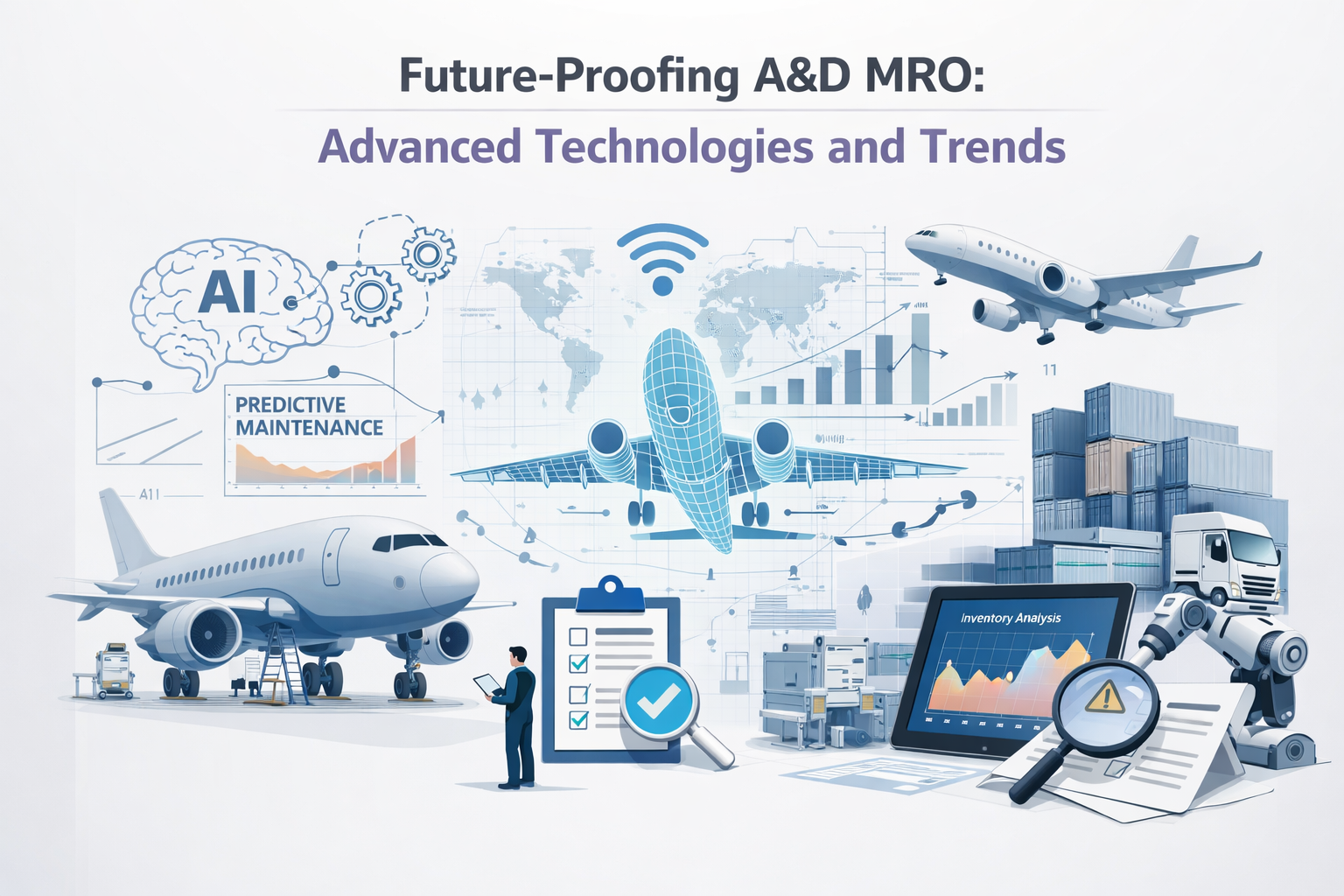
AI, IoT, and Predictive Analytics in MRO
Artificial intelligence, IoT, and predictive analytics are transforming maintenance and supply chain management in aerospace and defense. These technologies are not just add-ons; they are integrated into IFS Cloud to improve efficiency, reliability, and compliance.
-
AI-driven predictive maintenance: Machine learning models process sensor data from aircraft and equipment to forecast potential failures. Maintenance schedules are adjusted based on real-time usage and condition, which reduces unplanned downtime and extends asset life.
-
IoT-enabled asset monitoring: Connected sensors continuously track the status of critical components. Alerts are generated when performance deviates from expected parameters, allowing maintenance teams to respond quickly and prevent issues from escalating.
-
Automated compliance monitoring: AI tools review maintenance records, part certifications, and documentation for anomalies or missing information. Non-compliant parts or incomplete records are flagged before they can impact operations or trigger audit findings.
-
Digital twins and simulation: Virtual models of assets and processes allow organizations to simulate maintenance scenarios, test changes, and analyze the impact of different strategies without disrupting live operations.
-
Intelligent supply chain optimization: Predictive analytics evaluate supplier performance, lead times, and inventory levels. The system recommends procurement actions and identifies potential risks, supporting proactive supply chain management.
-
Continuous learning: The platform adapts as new data is collected, refining predictive models and improving the accuracy of maintenance forecasts and recommendations over time.
Read Next: The Benefits of AI in ERP Systems: A Deep Dive into IFS Applications (2026 Guide)
Composable Solutions and Modular Upgrades
Flexibility is essential for aerospace and defense MRO operations that must respond to evolving requirements, new contract types, and regulatory changes. IFS Cloud’s composable architecture supports this need by allowing organizations to deploy, upgrade, or replace modules as business needs change.
A modular approach means that only the necessary applications, such as MRO, EAM, or PLM, are activated when initially implementing IFS, reducing complexity and cost. When new requirements arise, the IFS partner can add additional modules without disrupting existing workflows.
Upgrades are managed at the module level, so improvements or new features can be adopted quickly and with minimal risk. Workflows can be adapted to support new regulations, contract structures, or operational models, ensuring that the system remains aligned with business objectives. This approach supports continuous improvement and innovation, helping organizations maintain operational excellence and regulatory compliance as the industry evolves.
Achieving MRO Excellence with IFS Cloud
Aerospace and defense organizations face mounting pressure to deliver operational efficiency, strict compliance, and asset reliability in every aspect of their MRO operations. IFS Cloud stands out as an ERP solution designed for the realities of the defense industry and aviation maintenance, offering a suite of applications that streamline operations, automate compliance, and support end-to-end asset tracking.
The ability to deploy only the modules needed, adapt workflows for complex projects, and scale as requirements evolve positions IFS Cloud as a future-ready choice for MRO providers seeking to stay competitive.
-
Review current MRO IT systems and identify gaps in compliance, asset tracking, and workflow automation that impact operational efficiency.
-
Evaluate how IFS Cloud’s management tools, predictive analytics, and modular architecture can address specific needs in aviation maintenance and defense manufacturing.
-
Plan for a phased deployment that aligns with business priorities, regulatory requirements, and the need for seamless integration across engineering, procurement, and maintenance teams.
Astra Canyon Group specializes in guiding organizations through the complexities of IFS Cloud implementation, from initial assessment to ongoing optimization. Our approach is tailored to the unique demands of aerospace and defense, ensuring that every solution supports compliance, efficiency, and measurable results. Get started with an IFS Cloud MRO assessment to see how your operation can achieve compliance, efficiency, and a measurable return on investment.
FAQs
What makes IFS Cloud different from other MRO software solutions for aerospace and defense?
IFS Cloud is designed as a single platform that combines ERP, EAM, and MRO capabilities, supporting the full lifecycle of assets in regulated environments. The system includes modules for predictive maintenance, compliance management, and supply chain integration, all tailored for the aviation industry and defense manufacturers. This approach reduces the need for third-party add-ons and enables organizations to streamline operations, improve asset reliability, and ensure compliance with industry standards.
How does IFS Cloud help ensure compliance with FAA, ITAR, and AS9100 requirements?
Compliance frameworks for FAA, ITAR, and AS9100 are embedded directly into IFS Cloud workflows. The system generates digital sign-offs, audit trails, and documentation automatically, reducing manual effort and audit risk. Compliance checkpoints are integrated into procurement, inspection, and quality assurance processes, making it easier to meet strict regulatory requirements and pass audits.
Can IFS Cloud support project-based workflows like engineer-to-order (ETO) and make-to-order (MTO)?
Yes, IFS Cloud is built to handle complex project-based workflows common in aerospace and defense. The platform includes tools for budgeting, procurement alignment, delivery tracking, and resource planning, supporting ETO, MTO, and contract-driven models. This flexibility allows organizations to manage complex projects and adapt to changing requirements without extensive customization.
What role do AI and IoT play in IFS Cloud’s MRO capabilities?
Artificial intelligence and IoT are integrated into IFS Cloud to support predictive maintenance, real-time asset monitoring, and intelligent supply chain management. Machine learning models analyze sensor data to forecast failures and optimize maintenance schedules, while IoT-enabled asset tracking provides continuous visibility into equipment status. These technologies help reduce downtime, improve asset utilization, and support proactive decision-making.
How does IFS Cloud improve supply chain management for MRO providers?
IFS Cloud offers real-time dashboards and predictive analytics that provide visibility into inventory levels, supplier performance, and lead times. The system recommends procurement actions, flags high-risk components, and supports project-based procurement for multi-year contracts. This level of integration helps MRO providers optimize inventory, reduce costs, and maintain operational resilience in a dynamic supply chain environment.
What are the key benefits of implementing IFS Cloud as an ERP solution for aviation maintenance and defense industry organizations?
Implementing IFS Cloud enables organizations to unify asset management, maintenance execution, and compliance processes on a single cloud platform. Benefits include reduced downtime, improved operational efficiency, enhanced audit readiness, and the ability to scale or adapt as business needs change. The suite of applications supports end-to-end asset tracking, workflow automation, and real-time analytics, helping organizations stay competitive and meet the demands of modern aerospace and defense MRO.
 Blake Snider

 Blake Snider : Nov 25, 2025 12:00:00 AM