Is your service-based business in the market for new Field Service Management (FSM) software? If so, you’ve come to the right place. When it comes to FSM, the market in 2026 is flooded with options ranging from simple apps for gig workers to complex enterprise suites.
So, how do you know if IFS Field Service Management (FSM) is the right tool for your team? In this guide, we break down the specific benefits of IFS FSM, compare it to other solutions, and help you decide if it’s the strategic fit for your organization's future.
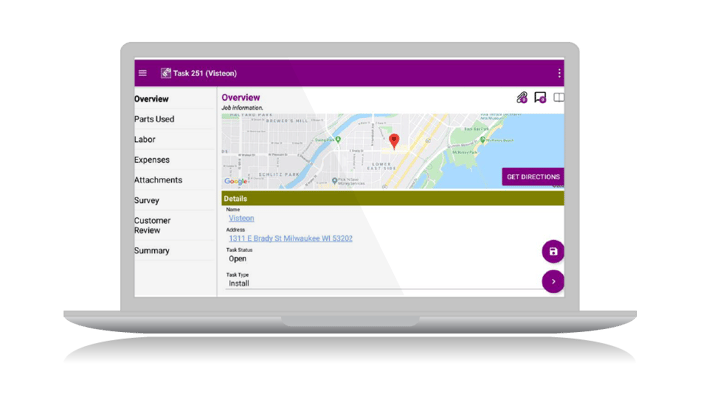
What is Field Service Management Software?
Field service management software helps businesses manage and dispatch field service technicians. At its core, the software tracks technician locations, schedules jobs, dispatches work orders, and handles invoicing.
However, in 2026, FSM has evolved beyond simple tracking. It is now the "command center" for Service Lifecycle Management—handling everything from predictive maintenance alerts to augmented reality remote support.
Is IFS FSM Right for Your Business Size?
IFS FSM is a cloud-based field service solution that is most ideal for mid-to-enterprise businesses with complex service operations.
If you have a fleet of 50+ technicians, manage complex assets (like medical devices, industrial machinery, or utility grids), and need to adhere to strict Service Level Agreements (SLAs), IFS is built for you. If you are a small residential plumber with 3 trucks, IFS might be more power than you need.
Key Features: Why IFS FSM Stands Out
IFS FSM software can have a transformative impact on service operations, making complex service management simple. It provides a 360-degree view of the entire service lifecycle.
1. AI-Assisted Scheduling & Optimization
AI-assisted scheduling helps the dispatcher select the technician with the necessary skills for the job—not just the one who is closest.
-
Dynamic Routing: Each technician is efficiently scheduled to reduce travel time, fuel costs, and overtime.
-
Predictive Travel: Navigation to each job site is embedded in the schedule, accounting for real-time traffic patterns.
2. The "Zero-Touch" Work Order
Each new work order begins with guided assistance to create the project scope. The full project scope contains work details, a supply checklist, and client contact information.
-
Status Updates: At the job site, the technician views the job task card and sends status updates via mobile.
-
Automated Invoicing: When the work is completed and the customer signs the completion sheet, that document is automatically sent to the billing office for quick invoicing. No excessive paperwork; everything is digitally archived.
3. Built-In Analytics & Reporting
IFS FSM has a built-in analytics module. The analytics tools help managers allocate the correct amount of time needed for specific service types based on historical data.
Customer Reviews:
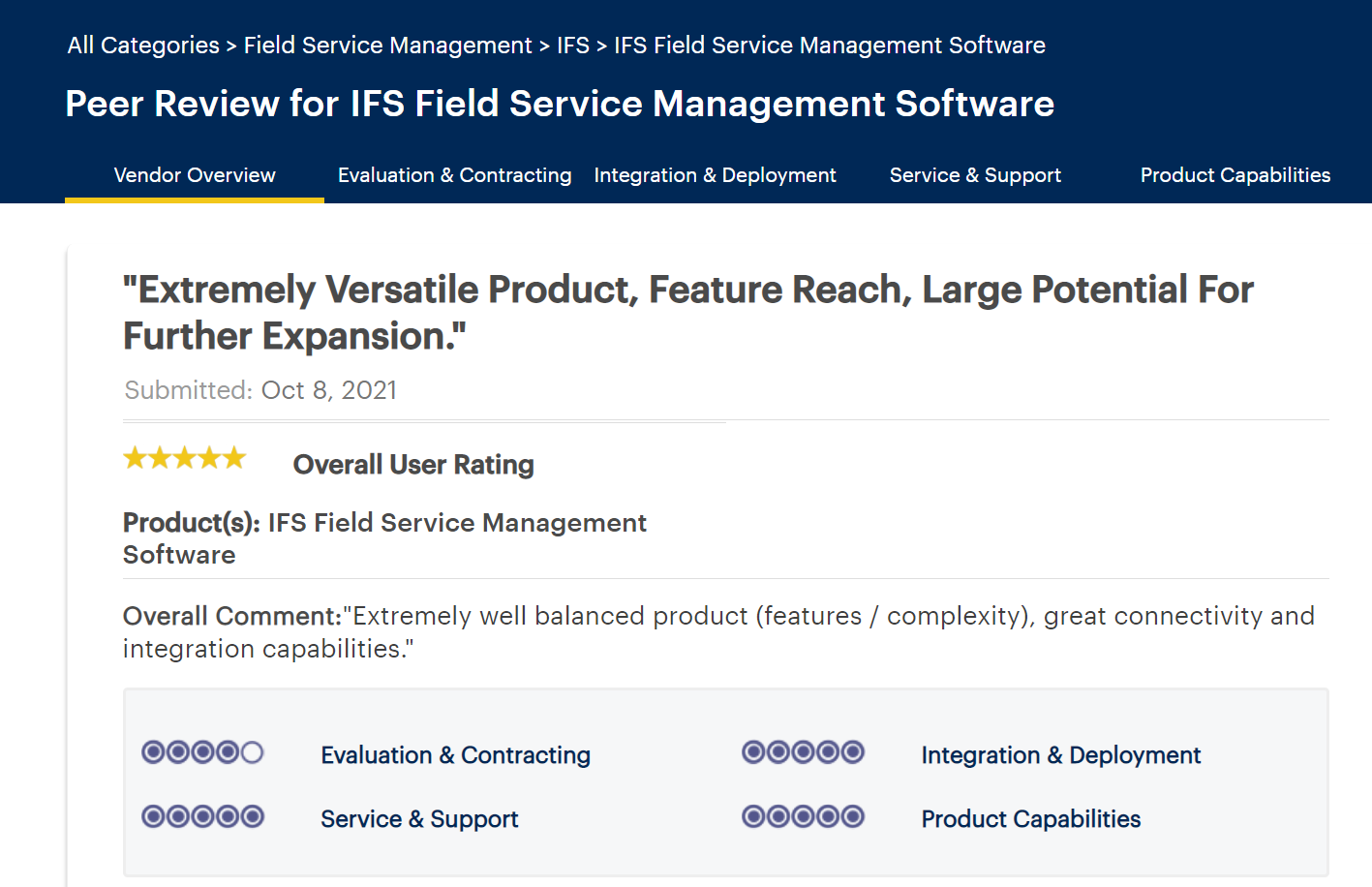
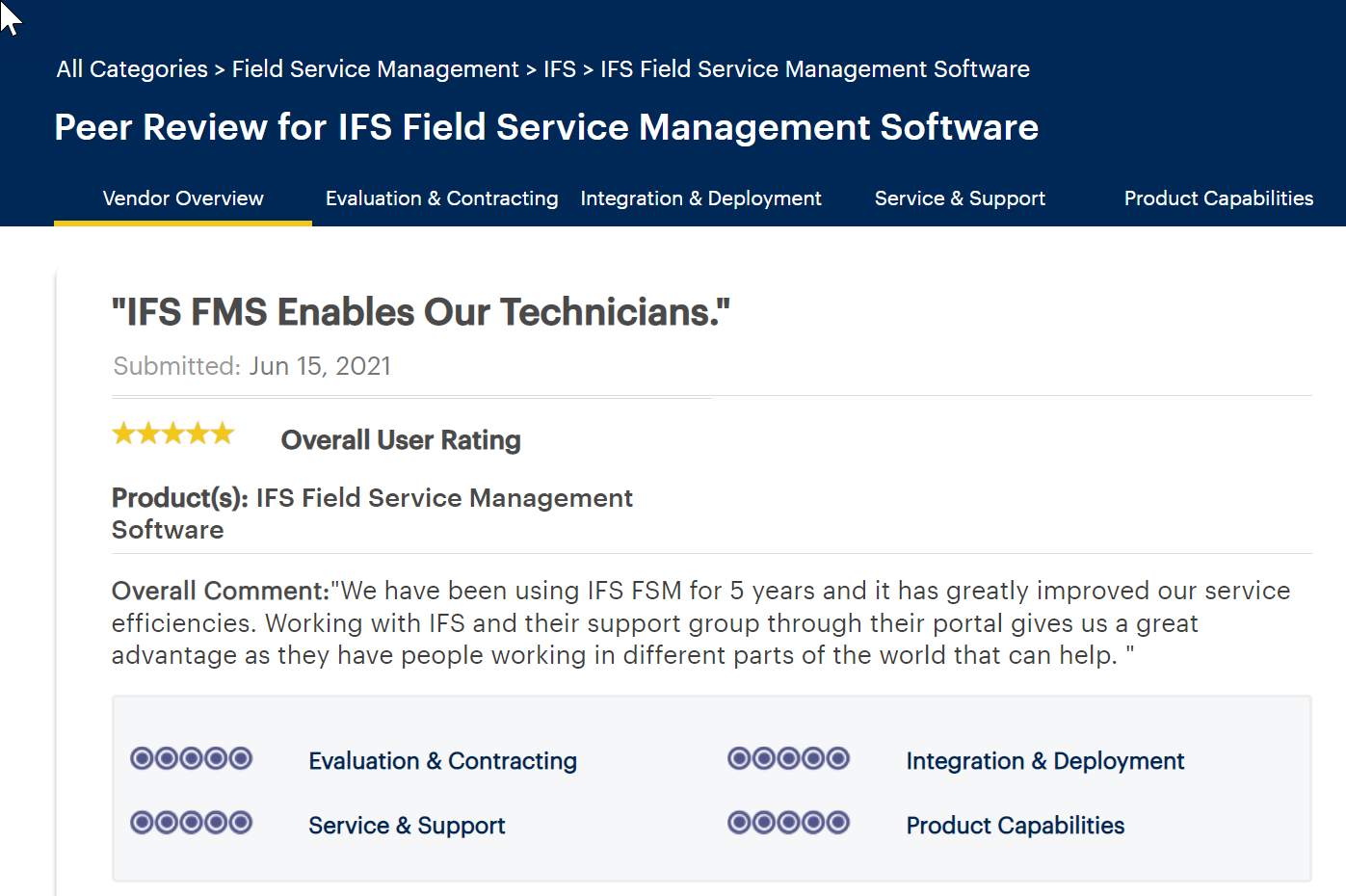
Customers have given IFS FSM positive reviews for its ability to streamline and improve field service operations. They appreciate the flexibility and customizable features of this software solution and say it helps them provide exceptional customer service.
Others have found it to be user-friendly and intuitive and say it has helped them grow their business.
The 2026 Edge: Remote Assistance & AI
In 2026, the biggest trend is remote service. IFS is leading this charge with tools that allow you to fix problems without rolling a truck.
IFS Remote Assistance™
This merged reality (MR) solution allows a senior expert at headquarters to "see what the technician sees" through their smartphone or smart glasses. They can overlay digital hands and diagrams onto the real-world equipment to guide a junior technician (or even a customer) through a repair.
IFS Customer Engagement™
Enhanced with Agentic AI, this configurable hub lets clients book services or troubleshoot issues online. The AI can diagnose simple problems and suggest a self-fix, potentially saving a truck roll entirely.
Real-World ROI: What to Expect
Astra Canyon Group customers using IFS FSM can generally expect to experience:
-
20% increase in equipment uptime.
-
33% increase in technician productivity.
-
35% reduction in drive time.
Industry Analyst Recognition
IFS continues to be a dominant force in the market. It has consistently been named a Leader in the Gartner® Magic Quadrant™ for Field Service Management, recognized for its "Completeness of Vision" and ability to execute complex service scenarios.
IFS FSM Pricing
IFS does not list public pricing information for its software, as it is tailored to the scale and complexity of your deployment. The cost will vary depending on the size of your company, the number of users, and your specific module needs.
We at Astra Canyon Group are a leading IFS channel partner and can help you understand the investment required.
Ready to see it in action? Click the button below to get a personalized estimate and see if IFS FSM is the right move for your organization.
Get Your IFS FSM Estimate
 Blake Snider

 Blake Snider : Dec 12, 2025, 7:30:00 AM