A turnaround shutdown outage (STO) is often a multi-million-dollar project involving hundreds or thousands of work activities. During these events, organizations have a limited window to complete maintenance, inspections, upgrades, regulatory work, and capital projects before assets return to service.
The challenge is not simply completing the work. It is coordinating people, materials, schedules, contractors, and costs while controlling risk and minimizing downtime.
Because STOs span maintenance management, project management, asset management, procurement, inventory, workforce planning, and financial tracking, organizations often struggle when these processes operate across disconnected systems.
IFS Cloud helps address this challenge by bringing STO management, maintenance execution, asset management, resource planning, and cost control into a single operational platform.
Understanding Shutdown, Turnaround, and Outage STO Events
While shutdowns, turnarounds, and outages may differ in scope, duration, and industry terminology, they share a common challenge: coordinating a large volume of maintenance, inspection, and project activities within a limited execution window. Understanding how these events differ from routine maintenance is essential for building effective planning, resource management, and execution strategies.
What Is a Turnaround Shutdown Outage STO?
A turnaround shutdown outage (STO) is a planned event where critical equipment, production units, or entire facilities are taken offline to perform maintenance, inspections, repairs, upgrades, and reliability improvements that cannot be completed during normal operations.
While the terms are often used interchangeably, shutdowns typically refer to planned maintenance outages, turnarounds usually involve larger and more comprehensive maintenance programs, and outages are common terminology in utilities and power generation environments. Regardless of the label, the objective remains the same: complete the required scope of work safely, efficiently, and within schedule before returning the asset to service.
What makes an STO different from routine maintenance is the scale of coordination required. Hundreds or even thousands of work activities may need to be executed within a compressed timeframe, often involving internal maintenance teams, contractors, inspectors, operations personnel, and project teams working simultaneously.
Planned vs. Unplanned STO Activities
Every STO begins with a defined scope of planned work. Maintenance tasks, inspections, equipment upgrades, and regulatory requirements are typically identified months in advance and incorporated into the outage schedule.
The challenge is that the true condition of an asset is not always known until the equipment is opened for inspection. Corrosion, unexpected wear, failed components, regulatory findings, and other discoveries can introduce emergent work that was not included in the original plan.
This is where many STO events succeed or fail. Organizations must balance the need to address newly discovered issues without allowing scope growth to derail schedules, budgets, or startup targets. Effective STO management depends on maintaining visibility into scope, resources, costs, and execution progress as conditions change throughout the event.
The STO Planning Phase: Building the Foundation for Success
Successful STO execution begins long before an asset is taken offline. The planning phase establishes the scope, resources, schedule, and governance needed to complete the outage safely and efficiently while minimizing downtime.
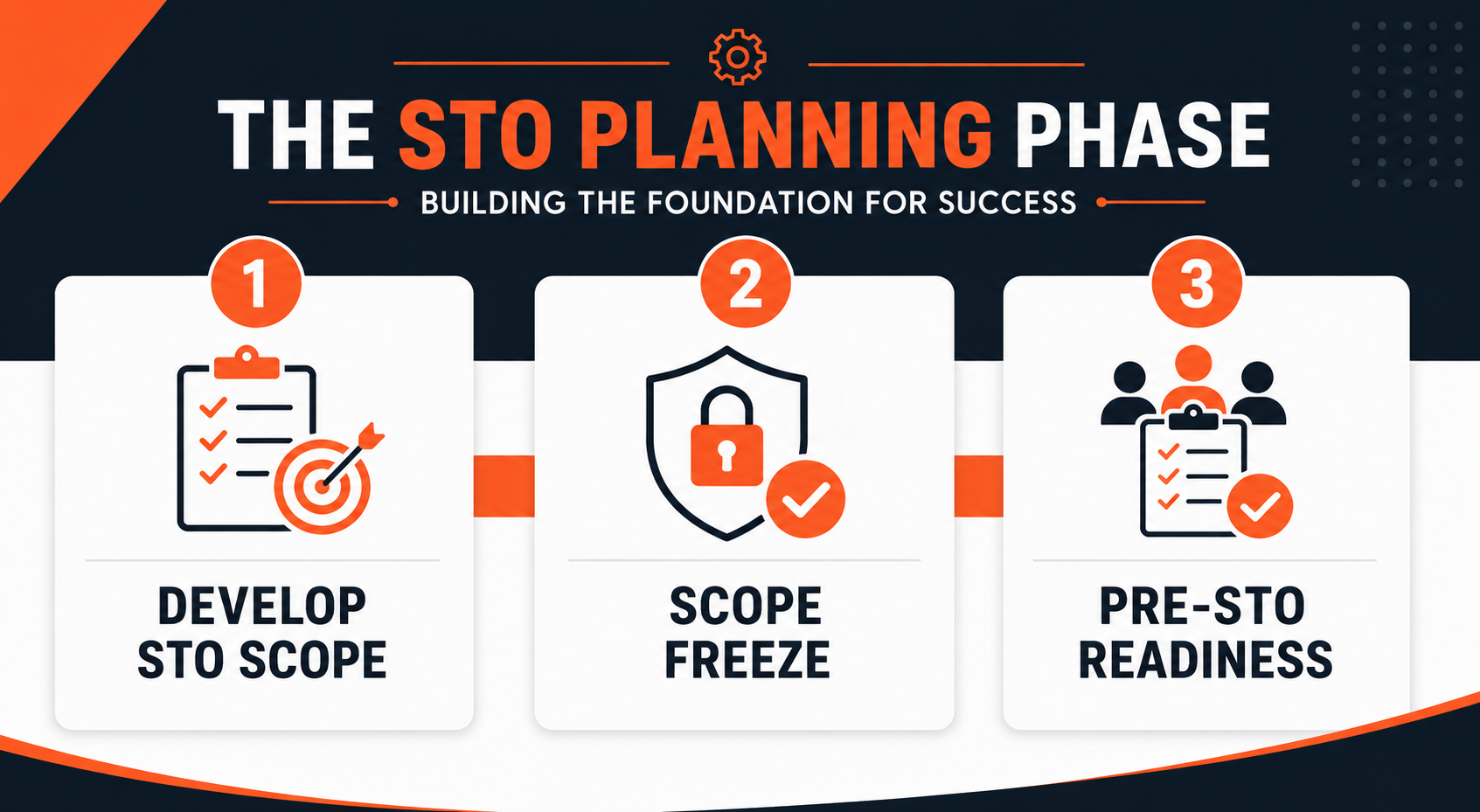
Developing the STO Scope of Work
A successful turnaround starts with a clearly defined scope of work. Planning teams must identify the maintenance activities, inspections, reliability improvements, capital project work, regulatory obligations, asset modifications, safety requirements, and contractor support required during the outage.
The objective is not simply to create a list of tasks. It is to develop a complete understanding of the work that must be performed so labor, materials, schedules, and resources can be planned well before execution begins.
Why Scope Freeze Protocols Matter
One of the most important disciplines in STO management is establishing a formal scope freeze. Once the scope reaches an agreed level of maturity, organizations need controls that prevent unnecessary additions from disrupting schedules, budgets, and resource plans.
A well-managed scope freeze helps reduce project scope creep, improve schedule accuracy, support procurement planning, and provide greater confidence in resource forecasts. While emergent work may still occur during execution, modifications after the scope freeze should follow defined governance and approval processes.
Pre-STO Readiness Reviews
Before execution begins, organizations should validate that the outage is ready to proceed. This includes confirming that materials are available, work packages have been approved, contractors have been mobilized, permits are in place, safety plans are finalized, and risk assessments have been completed.
Readiness reviews help identify gaps before the outage begins, reducing the likelihood of delays, resource conflicts, and avoidable disruptions during execution.
Read More: IFS Data Migration for Complex Asset Data: Mapping, Cleansing, and Validation Explained
How IFS Cloud Supports STO Management
IFS Cloud provides an integrated STO framework that brings together enterprise asset management, maintenance management, project management, scheduling, procurement, workforce planning, and financial visibility within a single platform. For organizations managing complex shutdowns, turnarounds, and outages, this connected approach helps reduce the coordination challenges that often emerge when planning and execution activities are spread across multiple systems.
Read More: Connecting IFS and PLM for Aerospace and Defense Manufacturing
Integrated STO Planning and Scheduling
Successful STO events depend on detailed planning long before execution begins. Teams must define the outage scope, develop work packages, sequence activities, allocate resources, coordinate contractors, and establish realistic schedules that account for thousands of individual tasks.
IFS Cloud supports this process by connecting project planning, maintenance activities, procurement requirements, and workforce availability within a common planning environment. Planning teams can develop work breakdown structures, assign labor and contractor resources, track dependencies, and monitor schedule readiness while maintaining visibility into the broader outage plan.
This integrated approach helps organizations identify potential conflicts earlier, improve schedule accuracy, and ensure critical resources are available when execution begins.
Maintenance Management and Work Execution
Maintenance execution is where STO plans succeed or fail. During an outage, teams must coordinate inspections, preventive maintenance activities, corrective repairs, emergent work, and startup readiness activities while maintaining control over schedule performance and labor utilization.
IFS Cloud connects work orders, inspection programs, labor tracking, asset records, and project activities within a single operational environment. Maintenance planners and supervisors can monitor work progress, track completion status, manage backlog, and evaluate emerging issues without relying on disconnected spreadsheets or manual reporting processes.
Because maintenance activities remain connected to the broader STO plan, organizations gain greater visibility into how execution decisions affect schedules, resources, and overall outage performance.
Asset Management and Reliability Visibility
One of the primary objectives of a shutdown or turnaround is improving asset reliability. The outage often provides the only opportunity to inspect critical equipment, address long-standing issues, and perform maintenance activities that cannot be completed during normal operations.
IFS Cloud provides access to equipment history, inspection findings, failure data, maintenance records, and asset performance information that can help teams make more informed decisions during the outage. When emergent work is discovered, planners can evaluate the condition of the asset, review historical performance, assess operational risk, and determine whether additional work should be completed before startup.
This level of visibility helps organizations balance outage duration, reliability objectives, and operational risk while ensuring maintenance decisions support long-term asset performance.
Read More: A Deep Dive into IFS Cloud for Enterprise Asset Management (EAM)
Managing Resources During STO Execution
Even the most detailed STO plan can fail if the right people, skills, and materials are not available when execution begins. Resource coordination becomes increasingly complex during shutdowns and turnarounds as organizations balance internal maintenance teams, contractors, inspectors, engineering resources, and operations personnel against a fixed outage schedule. Effective resource management helps reduce bottlenecks, maintain productivity, and keep critical path activities moving throughout the event.
Mobilization and Management of Resources
Resource planning is often one of the most challenging aspects of STO management. Unlike routine maintenance activities, shutdowns and turnarounds require organizations to coordinate internal maintenance teams, contractors, engineering resources, operations personnel, inspectors, and specialized technicians within a compressed execution window.
The challenge is not simply having enough people available. Organizations must ensure the right skills, certifications, tools, and resources are available at the right time to support critical path activities. Delays in workforce mobilization or resource allocation can quickly affect schedule performance and increase outage costs.
IFS Cloud helps organizations coordinate workforce scheduling, work packages, project activities, and maintenance execution within a single planning environment, providing greater visibility into resource requirements throughout the STO lifecycle.
Contractor and Vendor Coordination
Many STO events rely heavily on external contractors to supplement internal resources and execute specialized work. During a major turnaround, multiple contractors may be working simultaneously across different work areas, making coordination and accountability critical to successful execution.
IFS Cloud helps organizations manage contractor assignments, track labor utilization, monitor productivity, validate work completion, and maintain visibility into contractor-related costs. By connecting contractor activities to work orders, schedules, and project plans, organizations can improve coordination, reduce communication gaps, and maintain better control over outage execution.
Effective contractor management becomes particularly important when emergent work is discovered during the outage, requiring rapid decisions about resource availability, schedule impacts, and execution priorities.
Managing Risk, Cost, and Scope During STO Execution
Once execution begins, maintaining control becomes one of the biggest challenges in STO management. New inspection findings, emergent work, resource constraints, and schedule pressures can quickly affect costs, timelines, and outage objectives. Organizations need the ability to evaluate risks, manage scope changes, and understand the operational impact of decisions as the event unfolds.
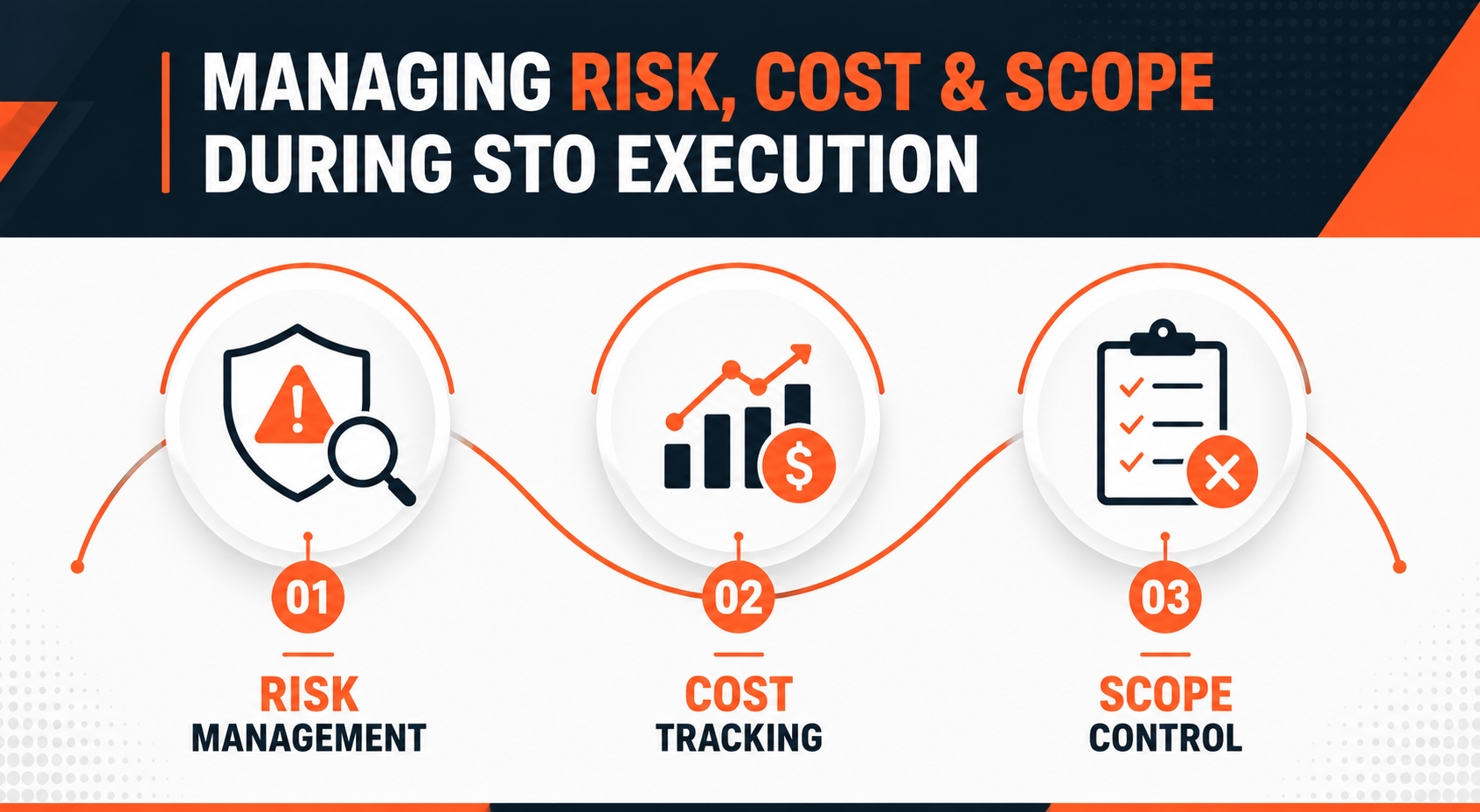
Risk Assessments and Risk Management
Risk management should begin during the planning phase and continue throughout execution. While many risks can be identified before the outage starts, new challenges often emerge once equipment is opened, inspections are completed, and work activities are underway.
Common STO risks include scope growth, unexpected equipment conditions, material shortages, contractor delays, and safety incidents. Without a structured approach to evaluating and prioritizing these risks, organizations can quickly lose visibility into how individual issues affect the broader outage plan.
IFS Cloud helps teams monitor project status, work execution, resource utilization, and schedule performance, providing the visibility needed to identify potential risks early and respond before they affect critical milestones.
Cost Tracking and Financial Visibility
Cost control is a critical component of successful STO execution. Labor costs, contractor expenses, materials, equipment rentals, and emergent work can all affect the final cost of the outage.
IFS Cloud provides visibility into outage-related costs as work progresses, helping organizations track spending against budgets and understand the financial impact of scope changes or schedule delays. This allows project teams to make more informed decisions throughout the event rather than waiting until closeout to assess performance.
Preventing Scope Creep During Execution
Scope creep remains one of the most common causes of schedule overruns and budget increases during shutdowns and turnarounds. While emergent work is often unavoidable, organizations need clear processes for evaluating whether additional work should be performed during the outage or deferred to a future maintenance window.
IFS Cloud helps organizations maintain visibility into approved work, proposed scope additions, resource availability, and schedule impacts. By connecting scope changes to project plans, work orders, and cost tracking, teams can make better decisions about how new work will affect outage objectives before committing resources.
Closeout and Review Activities
The STO process does not end when equipment returns to service. Closeout and review activities provide an opportunity to evaluate performance, document lessons learned, and identify improvements that can strengthen future shutdowns, turnarounds, and outages.
Measuring STO Performance Against Plan
A structured post-STO review helps organizations assess whether outage objectives were achieved and where execution deviated from plan. Teams should evaluate schedule performance, cost performance, safety outcomes, scope changes, emergent work trends, contractor effectiveness, and the impact of completed work on asset reliability.
The goal is not simply to determine whether the outage finished on time or within budget. Organizations should understand what drove the results. Schedule delays, cost overruns, and startup challenges often reveal opportunities to improve planning assumptions, resource allocation, risk management practices, or scope definition for future events.
Turning Lessons Learned Into Better STO Outcomes
Leading organizations treat every STO as an opportunity to improve the next one. By analyzing performance metrics, execution data, and lessons learned, teams can refine planning processes, strengthen risk management practices, improve resource forecasting, and enhance scope control.
Post-STO reviews should also evaluate whether the original shutdown scope was defined accurately, whether risk assessments proved effective, how emergent work was managed, and whether governance processes supported timely decision-making during execution.
Over time, these insights help organizations reduce execution risk, improve outage performance, and build a more repeatable framework for managing future shutdowns, turnarounds, and outages.
STO Management Checklist
Every shutdown, turnaround, and outage is different, but the core planning and execution requirements remain largely the same. Before your next STO, use the checklist below to evaluate readiness across planning, resource management, execution, and closeout activities.
Organizations that consistently achieve strong STO results treat this checklist as more than a readiness exercise. Organizations that consistently achieve strong STO results treat this checklist as more than a readiness exercise. A disciplined approach to planning, execution, and performance review helps strengthen outage outcomes and improve future shutdown, turnaround, and outage events.
Turning STO Complexity Into Operational Control
Shutdowns, turnarounds, and outages are among the most demanding events that asset-intensive organizations face. Success depends on disciplined planning, effective scope management, coordinated resource execution, and the ability to maintain visibility as conditions change throughout the outage.
IFS Cloud helps bring these activities together within a single platform, connecting maintenance management, asset management, project planning, resource coordination, and cost control. This integrated approach can help utilities and oil & gas organizations reduce execution risk, improve decision-making, and strengthen STO performance over time.
For organizations evaluating how to improve outage planning and execution, Astra Canyon helps clients align IFS Cloud with operational requirements through IFS ERP Implementation, IFS ERP Integration, and ongoing Application Managed Services. From workflow design and system integration to long-term optimization and support, Astra Canyon helps organizations build a connected STO management environment that supports operational control before, during, and after major outage events.
Whether you're planning an upcoming turnaround, major outage, or shutdown, Astra Canyon can help you align IFS Cloud with your maintenance, asset management, and operational goals.
Frequently Asked Questions
What is the difference between a shutdown, turnaround, and outage?
A shutdown is typically a planned maintenance event, a turnaround usually involves a larger and more comprehensive scope of work, and an outage is common terminology in utilities and power generation. Collectively, these events are often referred to as STOs because they share similar planning, execution, and asset management requirements.
Why are shutdowns and turnarounds so difficult to manage?
Managing shutdowns and turnarounds requires organizations to coordinate maintenance activities, inspections, contractors, materials, schedules, and safety requirements within a limited execution window. Because critical assets or an entire plant may be taken offline, even minor delays can affect the project timeline, increase costs, and delay the resumption of operations.
What should an STO management team focus on during execution?
An STO management team should focus on maintaining visibility into work progress, critical path activities, emergent work, resource utilization, and scope changes. Successful STO execution depends on the ability to make informed decisions quickly while balancing safety, schedule performance, and cost control.
How does STO software support outage planning and execution?
STO software helps organizations manage outage planning, work packages, scheduling, resource allocation, inspections, and cost tracking within a structured management system. By connecting these business processes, organizations can improve visibility, reduce coordination challenges, and maintain greater control throughout the STO lifecycle.
What role does predictive maintenance play in STO planning?
Predictive maintenance can help organizations identify potential equipment issues before a turnaround event begins, allowing maintenance teams to prioritize work more effectively during the planning phase. When combined with inspection data and asset history, predictive maintenance supports more informed decisions about the scope of work and duration of the STO.
Why do utilities and oil & gas organizations use IFS Cloud for STO management?
IFS Cloud provides a connected platform for managing STO projects across maintenance management, asset management, project planning, resource coordination, and financial tracking. This integrated approach helps STO teams improve visibility, strengthen collaboration, and manage planned or unplanned work more effectively throughout the outage.
 Blake Snider

 Blake Snider : Jun 19, 2026, 3:29:59 PM


 Astra Canyon Marketing